Dementia
Key Takeaways A study of 3,973 older adults found that two combinations of disrupted daily rhythms, disturbed sleep, and activity patterns were associated with nearly twice the adjusted hazard …
Editor’s Note: This article was updated on November 14, 2026, to incorporate current scientific evidence on alcohol consumption, cognitive decline, and dementia risk. The revisions clarify that excessive alcohol …
Key Takeaways A study involving 61,437 UK Biobank participants found that accelerated brain aging, estimated from MRI scans, was associated with higher all-cause mortality and the development of diseases …
Key Takeaways In a large U.S. All of Us cohort, adults with a recorded ADHD diagnosis had a higher rate of subsequently recorded mild cognitive impairment or dementia than …
Key Takeaways Zostavax was linked to a 20% lower dementia risk in older adults over seven years. The effect was stronger in women, possibly due to immune differences. Findings …
Key Takeaways: Older adults vaccinated annually against the flu had a lower incidence of Alzheimer’s disease (5.1% vs. 8.5% in unvaccinated peers) over four years, hinting at a protective …
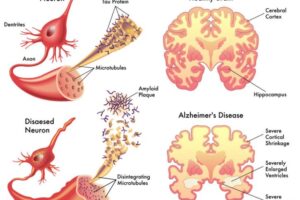
Key Takeaways: Researchers focus on soluble β-amyloid (β1-14) with a unique hairpin structure, aiming to prevent plaque formation rather than clearing existing ones. The TAP01 antibody binds to β1-14’s …
Key Takeaways: 9-Year Cognitive Gap: Women born in high-sexism states (e.g., Mississippi) experience memory decline equivalent to 9 additional years of aging compared to those in low-sexism states (e.g., …
A Rare Case of Occupational Exposure to Variant Creutzfeldt-Jakob Disease A case report published in the New England Journal of Medicine described a laboratory technician who developed variant Creutzfeldt-Jakob …
Key Takeaways: Parents show stronger neural connectivity in aging-sensitive brain regions. Benefits apply equally to mothers and fathers. Effect scales with number of children. Parenting acts as “brain enrichment” …