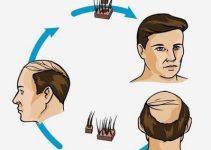
Androgenetic alopecia (AGA) is characterized by the progressive miniaturization of hair follicles and so leads to a gradual reduction in the size and length of hairs. Drugs such as minoxidil and finasteride can reduce AGA progression and can even induce regrowth in some people. However, individuals vary in terms of their response to treatment.

Scalp examination in a patient with male pattern hair loss.
Stem cell-derived conditioned media is produced from stem cells and contains bioactive compounds secreted by them. Rather than stem cell transplantation, it is hoped that this bioactive content can be utilized to affect follicle function.
Initial studies suggest that certain stem cell-derived conditioned media preparations can enhance hair density and thickness. Nonetheless, it is yet to be shown definitively whether or not this is as effective as conventional therapies. There are also issues to be addressed in relation to the most suitable means of delivery and the long-term safety profile.
Key Takeaways
- As well as containing bioactive compounds, stem cell-derived conditioned media may affect follicular function, even without the need for live cell transplantation.
- While some studies report positive effects on both hair density and thickness, these do not always result in perceptible aesthetic enhancements.
- A randomized study found no statistically significant additional benefit from the addition of conditioned medium to minoxidil compared with minoxidil plus placebo.
- Variation in stem cell source, production and delivery methods affects the extent to which clinical studies can be applied to commercial products.
- At present, conditioned media is still experimental and therefore should not be viewed as having been shown to be a suitable alternative to conventional AGA therapies.
Etiology of Androgenetic Alopecia
AGA occurs due to the interplay of genetic predisposition, androgen function and follicular function. Within those who are genetically susceptible, follicular miniaturization can occur as a consequence of the androgen testosterone being converted into a more potent form, dihydrotestosterone (DHT).
Hair follicle dermal papilla cells communicate with surrounding epithelial cells and consequently control follicular function. As AGA develops, the active growing phase of the hair cycle (anagen) becomes reduced in duration. Affected follicles continue to generate progressively finer hairs.
The etiological factors behind female pattern hair loss are more diverse and serum androgen levels are not always increased.
Regenerative therapeutic strategies aim to enhance hair follicle function by affecting the local environment. Unlike finasteride, stem cell-derived conditioned media is not known to act as a DHT production inhibitor.
Bioactive Components in Stem Cell-Derived Conditioned Media
During stem cell cultivation, bioactive compounds are secreted into the culture medium. Following removal of the stem cells from this medium, it is termed the conditioned medium.
Depending on the stem cell source and production method, bioactive components including growth factors, cytokines, extracellular vesicles and others can be present. Bioactive compounds secreted by cells constitute the secretome.
Selected examples of bioactive compounds of relevance to hair follicles include:
- Vascular endothelial growth factor (VEGF) – Involved in angiogenesis and possibly promotes follicular blood supply.
- Insulin-like growth factor 1 (IGF-1) – Encourages cell proliferation and is involved in hair growth regulation.
- Hepatocyte growth factor (HGF) – Affects cell proliferation, migration and remodeling.
- Platelet-derived growth factor (PDGF) – Plays a role in intercellular communication and tissue repair.
- Extracellular vesicles – Act as vehicles for intercellular transport of bioactive molecules and are able to affect cell function.
While conditioned media is intended to be a cell-free preparation, it is distinct from both stem cell transplantation and purified exosome material. Exosomes are a subtype of extracellular vesicle and so the range of bioactive components present in conditioned media can be wider.
Paracrine Signaling
The basis for investigating stem cell-derived conditioned media therapy is paracrine signaling; that is, the release of bioactive materials by cells that in turn affect neighboring cells.
Within hair follicles, communication between dermal papilla and epithelial cells affects the follicle’s movement between phases of growth, regression and dormancy.
Studies have been undertaken in vitro to assess whether stem cell secretions can affect follicular cells, induce angiogenesis and prompt dormant follicles to re-enter the growing phase.
Cell signaling pathways, such as Wnt/β-catenin and extracellular signal-regulated kinase (ERK), are relevant to hair follicles and are also of interest for future regenerative research.
A systematic review of stem cell-derived therapies for androgenetic alopecia was published in 2024. It analyzed clinical studies on cell-based and cell-free regenerative therapies.
It remains to be determined whether stem cell-derived conditioned media is capable of effectively modulating key signaling pathways, so as to sustainably improve hair growth in humans. Laboratory studies can indicate bioactivity but this is not conclusive evidence of clinical benefit.
Clinical Studies
Randomized Controlled Trial of Adipose-Derived Stem Cell Constituents
In 2020, Tak et al. published a randomized, double-blind, vehicle-controlled clinical study assessing the effects of a topical stem cell-derived extract from adipose stem cells.
The study involved 38 adults (29 males and 9 females) with AGA. Subjects were instructed to apply either the test or control solution twice daily for 16 weeks. Thirty-four people successfully completed the study.
Outcomes were as follows:
| Parameter after 16 weeks | Test group | Control group |
|---|---|---|
| Hair count | +28.1% | +7.1% |
| Hair diameter | +14.2% | +6.3% |
While objective assessment favored the test group, there were no statistically significant differences in self and observer assessments of the groups’ outcomes.
This is clinically important as even if there are significant objective findings with regard to density or thickness, this may not equate to readily recognizable aesthetic enhancement.
The study was carried out at one center, and involved only a modest number of females. Follow-up was also of limited duration. Furthermore, the mean baseline hair count was lower in the test group, which was adjusted for statistically.
Notably, the test substance was a stem cell constituent preparation rather than a traditional conditioned medium. Therefore, this supports further exploration of cell-free stem cell derivatives. However, it does not confirm the efficacy of other stem cell-derived preparations.
Systematic Review and Meta-Analysis of Conditioned Media
A systematic review and meta-analysis of 10 clinical studies examining the clinical effects of stem cell-derived conditioned media in alopecia was published in the Journal of Plastic, Reconstructive & Aesthetic Surgery in 2024.
Eight studies (with a total of 221 subjects) were analyzed quantitatively. Overall, statistical significance was seen in both enhanced density and thickness. Analysis restricted to the three randomized controlled trials also identified a statistically significant increase in hair density.
No statistically significant differences were seen in outcomes between different modes of delivery – topical, microneedling-assisted and injected.
Again, this does not prove that these delivery methods are equally efficacious. Furthermore, the limited number of randomized trials and variations in delivery methods impact on the robustness of such conclusions.
Findings From a 2026 Systematic Review
A further systematic review analyzing 20 clinical studies (involving 724 AGA patients) was published in Stem Cell Research & Therapy in April 2026.
Various cell-free and cell-based regenerative therapies were assessed, including conditioned media, platelet-rich fibrin, stromal vascular fraction and extracellular vesicles.
Six studies (analyzing data from 229 patients) focused on conditioned media. Four of these were randomized controlled trials. Various regimens employing conditioned media resulted in reported enhancements in hair density of between 7 and 16%, and in thickness of 11–32%.
A randomized split-scalp study also showed that intradermal administration of adipose-derived conditioned medium together with topical minoxidil was not statistically more beneficial than minoxidil and placebo.
This highlights the importance of distinguishing between baseline enhancement and actual enhancement brought about by novel therapy. To assess the added effect of a novel therapy it is necessary to compare a control group on an established treatment with a group who also receives the novel therapy.
Development of Commercial Stem Cell-Derived Products
Interest in stem cell secretomes has informed the development of commercially available scalp preparations incorporating stem cell-derived conditioned media and other bio-derived products.
One such preparation is Advanced Adipose-Derived Stem Cell Protein Extract (AAPE), obtained from human adipose-derived stem cell cultures. Its application in hair loss was investigated in a clinical study published in 2015.
An example of a preparation of non-human origin is the CALECIM Advanced Hair System which incorporates PTT-6. This is described by the manufacturer as a proprietary bio-derived component obtained from red deer umbilical cord–lining stem cell cultures. Differences in the biological sources of these preparations are of particular relevance when interpreting clinical findings.
This demonstrates how regenerative medical research can feed into the hair care industry. However, the commercial availability of a product does not in itself confirm that it is an effective AGA therapy.
Unlike pharmaceuticals containing a single defined active agent, stem cell-derived conditioned media is a complex biological product. Its composition and functionality depend on various factors, such as:
- Stem cell origin (species and tissue type).
- Culture and production techniques.
- Concentration of bioactive compounds.
- Formulation and storage.
- Quality assurance and batch uniformity.
Particularly pertinent is the differentiation between human- and non-human-derived conditioned media. Human stem cell-derived conditioned media (from adipose and/or umbilical sources) cannot, therefore, automatically be assumed to behave in the same way as red deer umbilical lining-derived material.
Controlled clinical studies are required to assess the efficacy of a given product in patients with a confirmed diagnosis of AGA, alongside information regarding the most appropriate mode of delivery for the product.
Delivery Methods and Clinical Outcomes
The stratum corneum, the outermost skin layer, can impede penetration of many substances, especially larger biomolecules. This poses difficulties for topical regenerative therapies.
Topical, injectable, microneedling-assisted and fractional laser-assisted delivery have all been studied as possible routes of delivery.
Microneedling can cause microperforations in the stratum corneum. This may improve product penetration. Furthermore, microneedling induces a wound healing response, which in itself may enhance follicular function.
Consequently, it is not always solely the conditioned medium which is responsible for clinical benefit in multimodality treatments.
Ideally, clinical studies should compare groups who receive equivalent procedures and who are administered either the investigational product or a control. This enables assessment of the individual contribution of the investigational product.
Moreover, findings relating to assisted delivery methods cannot automatically be extrapolated to a product delivered to undisturbed skin.
The absence of living stem cells does not guarantee the safety of conditioned media. Potential risks include allergic reactions, local inflammation and contamination during production or administration. Current clinical studies are insufficient to exclude uncommon or long-term adverse effects.
The U.S. Food and Drug Administration has not cleared microneedling devices for hair loss therapy or for use in combination with other products, such as cosmetics or drugs. Risks involved in microneedling include infection, hemorrhage, cutaneous irritation and altered pigmentation.
Products intended for topical cosmetic use should not be assumed to be suitable for injection or application to skin disrupted by microneedling.
As with other products, commercial availability does not equate to approval as an AGA therapy.
Interpretation of current clinical studies is also hampered by relatively small sample sizes, brief follow-up periods, variable product characterization and inadequate comparison with conventional therapies.
Additionally, increased hair density can be due to reactivation of pre-existing follicles. It does not necessarily indicate that new follicles have formed. Further biological and histological evidence would be required to demonstrate neogenesis.
Considerations for Patients Wishing to Use Stem Cell-Derived Products
Prior to choosing a regenerative therapy for AGA, an accurate diagnosis should be made. People can suffer from more than one condition leading to hair loss. Alongside AGA, telogen effluvium, nutritional deficiencies and inflammatory scalp conditions can occur. These often require distinct therapeutic approaches.
Patients should reflect on the following aspects prior to acquiring a stem cell-derived product:
- Has the product been subjected to peer-reviewed clinical testing in humans?
- Did the study population have a confirmed diagnosis of AGA?
- Was an appropriate control group included?
- Were objective and patient-perceived improvements reported?
- Did subjects receive co-interventions which might have influenced outcomes?
- Have the product’s long-term safety and both the longevity and maintenance requirements of the therapy been analyzed?
- Is the suggested delivery method supported by clinical evidence?
Individual before-and-after images are not a reliable indicator of a product’s efficacy since various factors can influence their visual appearance, including illumination, hair length, hair styling and angle of photography.
Financial costs can also be an issue. Both the product and any concomitant therapies may represent considerable ongoing expenditure, particularly where it is unclear for how long a therapy will be effective.
Individuals should consult a healthcare professional if they experience abrupt hair loss, patchy hair thinning, or scalp pain, erythema or desquamation.
Future Development of Cell-Free Regenerative Therapies
Identification of the key bioactive components of the secretome for modulating follicular function will be fundamental to future developments. Standardized assessment of bioactivity is also important.
Future clinical studies should analyze not only hair density and thickness but also patient perception of enhancement and the longevity of therapy. Investigation should also be undertaken to see if outcomes vary by sex, age and disease severity.
Comparisons with conventional therapies will be important in ascertaining whether stem cell-derived conditioned media provides substantially added value and whether it can affect the trajectory of AGA, rather than merely transiently enhance follicle function.
Conclusion
Stem cell-derived conditioned media is a potential non-cell transplant method of enhancing hair follicle function. Initial clinical studies are promising. However, evidence detailing the efficacy and long-term suitability of individual products is as yet limited.
Currently, stem cell-derived conditioned media should be considered as experimental therapy for AGA. A dermatologist can advise on the suitability of novel regenerative therapies within a person’s treatment regimen.
References
American Academy of Dermatology Association. (n.d.) Hair loss: Diagnosis and treatment. https://www.aad.org/public/diseases/hair-loss/treatment/diagnosis-treat
Behrangi, E., Amiri, S., Zeinali, R., Goodarzi, A., Roohaninasab, M., Khosravi, M. & Jafarzadeh, A. (2026) A systematic review of clinical evidence on the efficacy and safety of conditioned media, platelet-rich fibrin, stromal vascular fraction, extracellular vesicles and stem cells in androgenetic alopecia. Stem Cell Research & Therapy, 17, 194. https://doi.org/10.1186/s13287-026-05016-2
Chien, W.-Y., Huang, H.-M., Kang, Y.-N., Chen, K.-H., & Chen, C. (2024) Stem cell-derived conditioned medium for alopecia: A systematic review and meta-analysis. Journal of Plastic, Reconstructive & Aesthetic Surgery, 88, 182-192. https://doi.org/10.1016/j.bjps.2023.10.060
Fukuoka, H., & Suga, H. (2015) Hair regeneration treatment using adipose-derived stem cell conditioned medium: Follow-up with trichograms. Eplasty, 15, e10. https://pmc.ncbi.nlm.nih.gov/articles/PMC4379938/
Gasteratos, K., Kouzounis, K., & Goverman, J. (2024) Autologous stem cell-derived therapies for androgenetic alopecia: A systematic review of randomized control trials on efficacy, safety and outcomes. Plastic and Reconstructive Surgery – Global Open, 12(2), e5606. https://doi.org/10.1097/GOX.0000000000005606
Tak, Y.J., Lee, S.Y., Cho, A.R., & Kim, Y.S. (2020) A randomised, double-blind, vehicle-controlled clinical study of hair regeneration using adipose derived stem cell constituent extract in androgenetic alopecia. Stem Cells Translational Medicine, 9(8), 839-849. https://doi.org/10.1002/sctm.19-0410
U.S. Food and Drug Administration. (n.d.) Microneedling devices: Getting to the point on benefits, risks and safety. https://www.fda.gov/consumers/consumer-updates/microneedling-devices-getting-point-benefits-risks-and-safety